Chula Vista Artificial Grass
(619) 848-6480
Rooftop & Balcony Artificial Grass in Chula Vista, CA
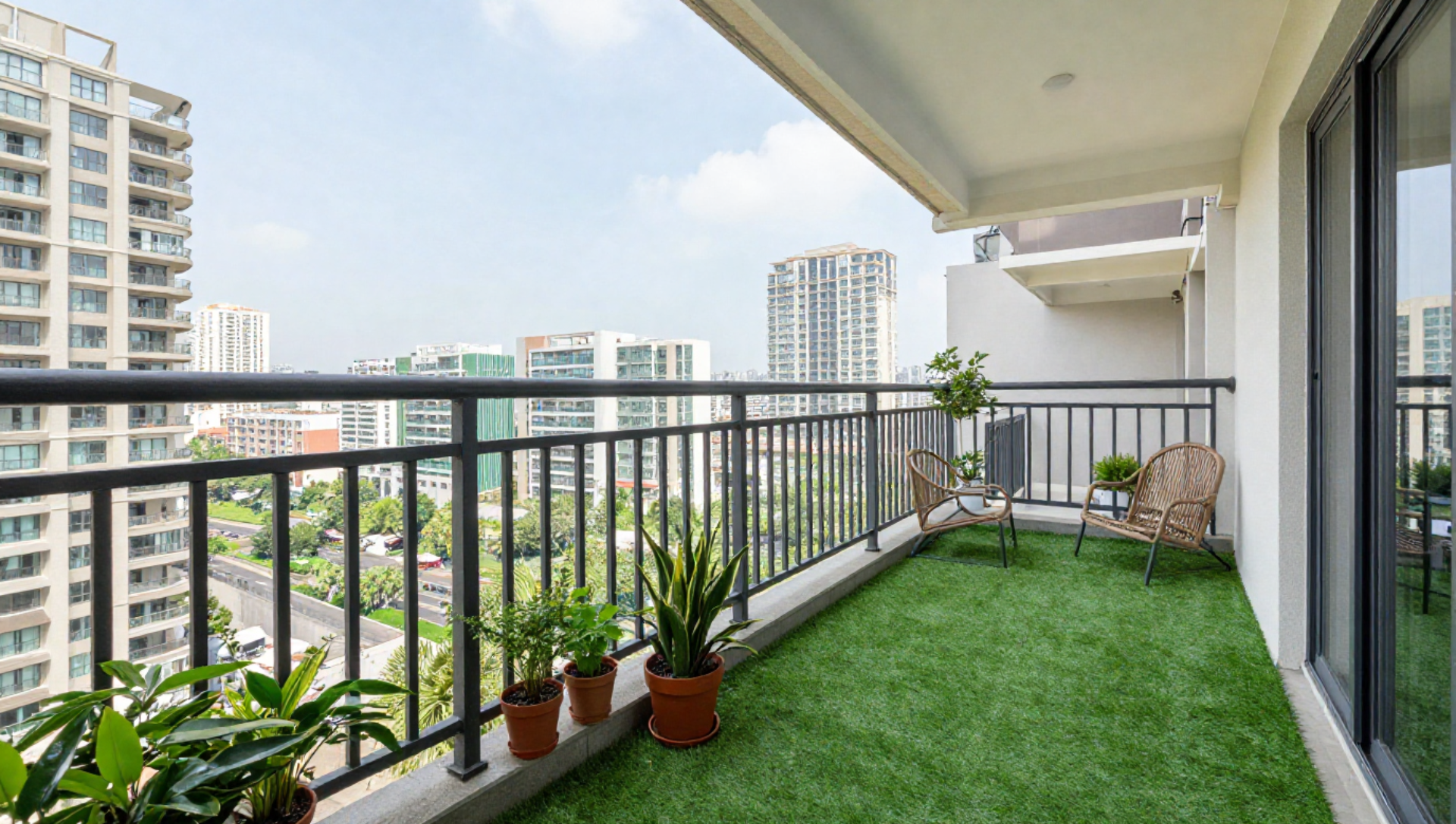
A rooftop or balcony may have enough room for a chair, a small table, and a few plants—but still feel more like a building surface than an outdoor living area.
Artificial grass can introduce a softer visual finish without requiring a conventional soil-based lawn.
However, rooftop and balcony turf in Chula Vista, CA needs a different approach from ground-level installation. The existing surface may be part of a waterproofing system, the structure has load limits, and drainage cannot be improvised.
Chula Vista Artificial Grass helps property owners explore turf layouts for suitable elevated outdoor spaces.
The First Question Is Whether the Surface Can Support the Project
Before discussing turf color or pile height, establish:
- Who owns the space
- Whether modifications are permitted
- Structural load limitations
- Existing waterproofing
- Drainage locations
- Door thresholds
- Required access
- Fire and building requirements
- A rooftop is not simply an empty backyard several stories above the ground.

Contact Us
Structural Load Considerations
Turf, supporting layers, furniture, planters, and people all contribute to the load on an elevated structure.
An appropriate professional may need to evaluate structural capacity before a rooftop project proceeds.
Artificial grass should never be presented as automatically lightweight enough for every roof or balcony.
Protecting Waterproofing
Many roof decks rely on membranes or other waterproofing systems to keep water out of the building.
Installation methods must account for those systems.
Unapproved penetrations, fasteners, adhesives, or drainage obstructions can create expensive building problems.
The turf plan should be coordinated with the property's waterproofing requirements.
Drainage Must Remain Functional
Water needs to reach the intended drains.
A turf installation should not:
- Block drainage outlets
- Create standing-water pockets
- Trap water against vulnerable details
- Raise the surface above critical thresholds
- Prevent access to required drains
Existing drainage should be understood before material selection.
Balcony Turf for Small Spaces
A compact balcony benefits from careful measurements.
Important details include:
- Door clearance
- Railing edges
- Furniture placement
- Planters
- Drain location
- Access for cleaning
In a small space, a few inches of added surface height can matter.
Rooftop Lounge Areas
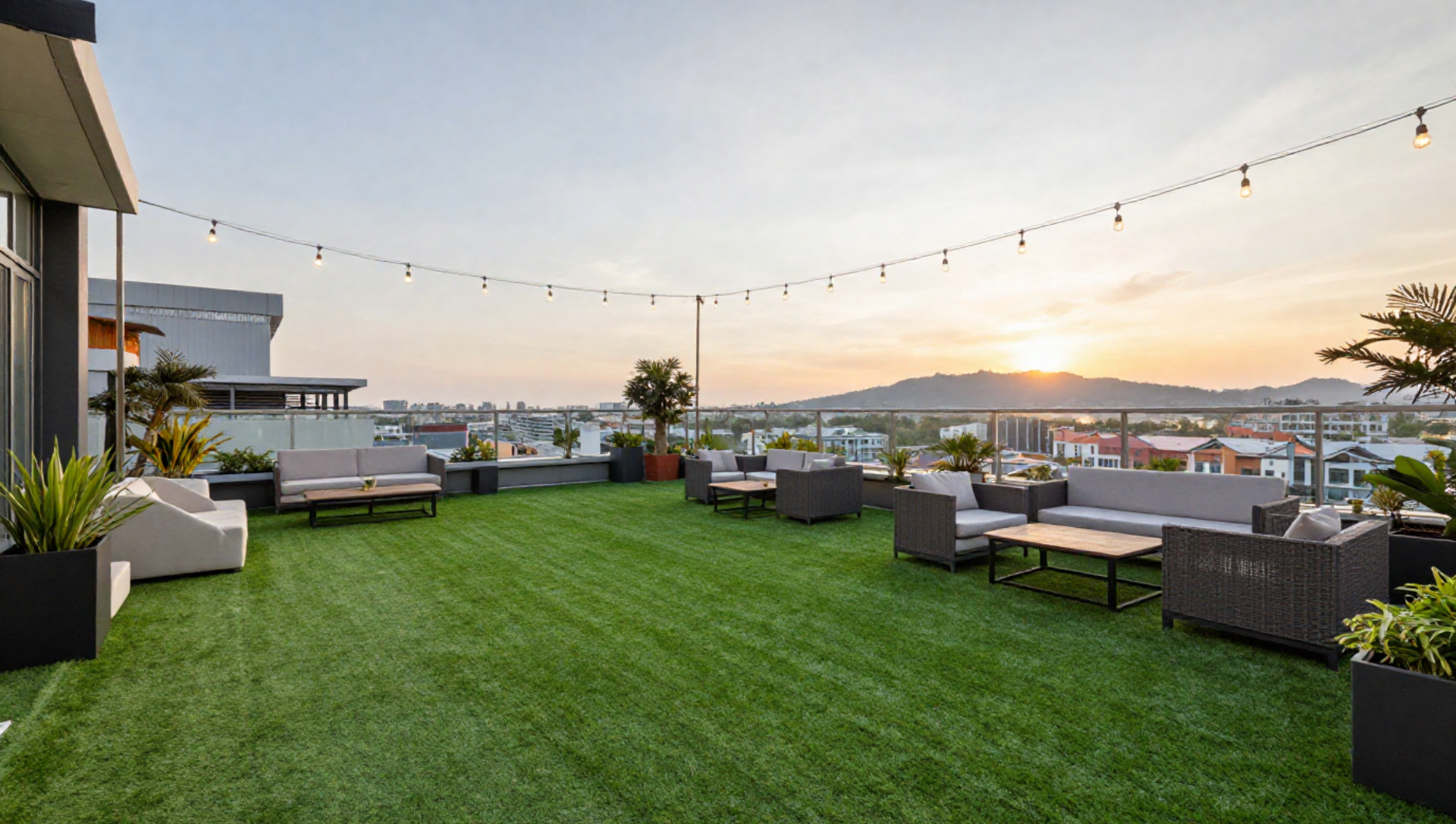
Larger roof decks may include:
- Seating
- Dining areas
- Planters
- Walkways
- Decorative turf sections
Artificial grass can be used as one design element rather than covering the entire roof.
Combining turf with existing hardscape may preserve practical circulation and access.
Turf Around Planters
Planters can create attractive transitions, but they also introduce water, soil, and maintenance considerations.
The design should prevent soil and organic debris from accumulating unnecessarily within the turf.
Planter placement should also respect structural and waterproofing requirements.
Sun Exposure and Surface Temperature
Elevated outdoor areas can receive substantial direct sun.
Artificial grass may become hot, particularly where there is little shade.
Consider:
- Shade structures where permitted
- Furniture placement
- Barefoot use
- Pet access
- Surface-temperature checks
Do not assume turf will remain cool because it looks like natural grass.
Wind Exposure
A roof deck may experience different wind conditions from a sheltered backyard.
Turf edges and installation methods should be planned for the actual site and approved attachment conditions.
Loose decorative turf that lifts in the wind can create a maintenance or safety problem.
Rooftop Pet Areas
A pet relief area on an elevated surface requires especially careful planning.
Urine, rinse water, odor, and drainage need a suitable management strategy.
A turf-covered balcony should not be marketed as a self-cleaning dog bathroom.
For ground-level or dedicated pet installations, explore our pet turf and dog runs page.
Cleaning Rooftop Turf
Maintenance may involve:
- Removing leaves
- Collecting debris
- Cleaning spills
- Grooming fibers
- Checking drainage
- Inspecting edges
The maintenance plan must fit the roof's waterproofing and water-management requirements.
HOA and Property Approval
Some balconies and rooftops are controlled by:
- Homeowners associations
- Condominium associations
- Property managers
- Building owners
Get required approvals before installation.
A resident's exclusive use of a balcony does not necessarily mean they can modify the underlying building assembly.
Rooftop Turf Cost
Pricing depends on:
- Area
- Access
- Material transport
- Existing surface
- Waterproofing restrictions
- Drainage design
- Approved installation method
- Edges and transitions
- Structural review where necessary
Elevated work can involve more planning than a similar-size ground-level installation.
Rooftop Turf FAQs
Can artificial grass go on a balcony?
Sometimes, subject to building approval, drainage, surface condition, and installation requirements.
Can turf be installed directly on a roof membrane?
The method must be compatible with the specific waterproofing system and approved project design.
Is artificial grass too heavy for a rooftop?
That depends on the complete installation and the structure's load capacity.
Will turf block my balcony drain?
It should not. Drainage must remain accessible and functional.
Can I use balcony turf for my dog?
Potentially, but cleaning and liquid drainage require careful planning.
Does rooftop turf get hot?
Yes, it can become hot in direct sun.
Do I need HOA approval?
You may. Confirm property rules and required permissions before proceeding.
Make Elevated Space More Usable Without Ignoring the Building Beneath It
Call (619) 848-6480 about rooftop and balcony artificial grass in Chula Vista, CA. Share the surface type, dimensions, building requirements, and how you want to use the space.