Chula Vista Artificial Grass
(619) 848-6480
School & Community Turf in Chula Vista, CA
A school or community space belongs to more than one kind of user.
Children may play there in the morning. Organized activities may take place later. Families may gather on weekends. Maintenance teams need access throughout the year.
That shared use makes school and community turf installation in Chula Vista, CA a planning project before it becomes a landscaping project.
Chula Vista Artificial Grass helps explore synthetic-turf options for suitable school, community, and shared-use outdoor areas, with attention to the intended activity, site conditions, and ongoing responsibilities.
Define Who Will Use the Space
The first discussion should include the people responsible for the property and its daily use.
Questions include:
- What age groups use the area?
- Is it for free play or organized sports?
- How many people use it?
- Will events be held there?
- Is the area open to the public?
- Who maintains it?
- What access must remain available?
A surface designed without these answers can fail to serve the people it was built for.

Contact Us
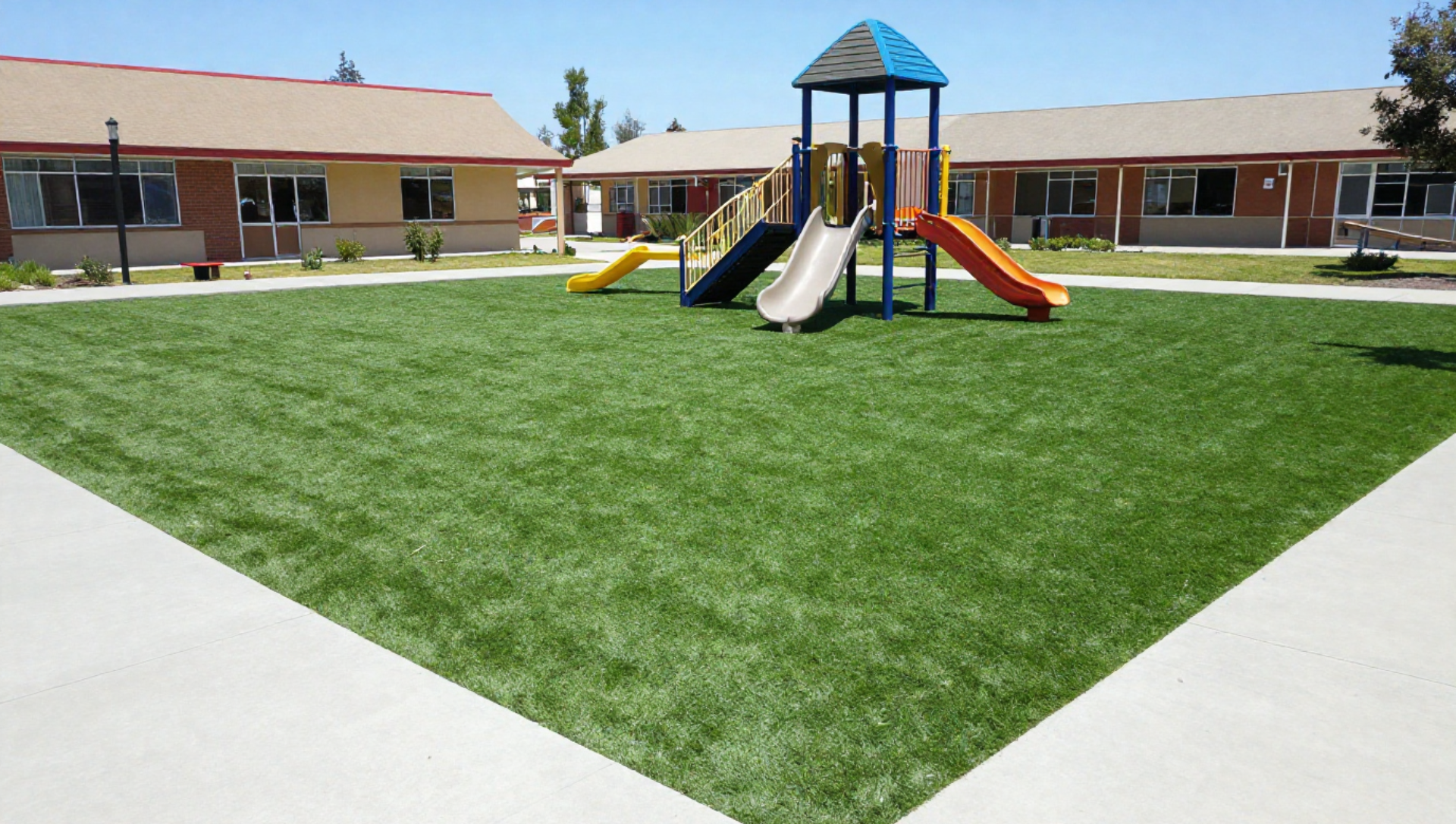
School Gathering Areas
Not every school turf project is an athletic field.
Some outdoor spaces are used for:
- Group activities
- Outdoor lessons
- Informal play
- Seating
- Assemblies
- General recreation
These areas may benefit from a layout that accommodates multiple activities without permanent sports markings dominating the space.
Community Recreation Areas
A shared recreation space may support residents or visitors with different needs.
Design considerations include:
- Circulation
- Seating
- Activity zones
- Drainage
- Shade
- Cleaning
- Access for maintenance
A community lawn should be planned around expected use rather than appearance alone.
Playground Turf Requires a Separate Safety Discussion
A playground located under or around elevated play equipment may require a specifically designed impact-attenuating surface.
Artificial grass alone does not establish compliant fall protection.
The complete surface system—including any required cushioning and installation details—must be evaluated against the applicable requirements for the equipment and intended use.
Do not treat a decorative turf product as a certified playground system.
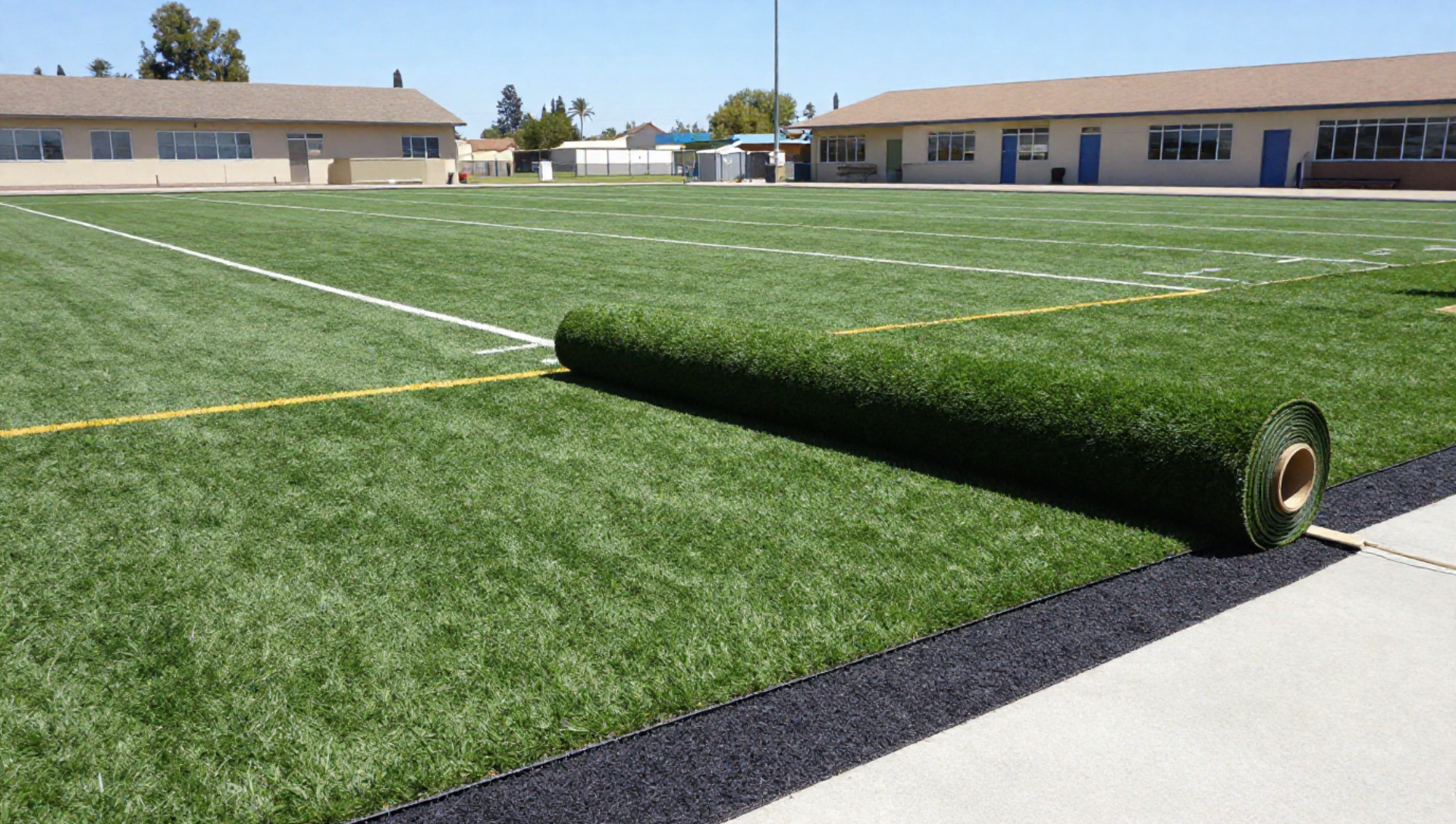
Sports Fields Are Another Distinct Application
Formal sports surfaces can have requirements involving:
- Sport-specific performance
- Field dimensions
- Surface characteristics
- Markings
- Drainage
- Maintenance
A school playground, a general gathering area, and a sports field should not automatically use the same specification.
See our
sports turf installation page for athletic applications.
Accessibility and Routes
Public and shared-use spaces may have applicable accessibility requirements.
Surface design should consider:
- Accessible routes
- Transitions
- Changes in level
- Entrances
- Intended uses
Accessibility compliance must be evaluated for the actual project; installing turf does not automatically make a space ADA-compliant.
Heat and Shade
Children and community users may spend extended periods outdoors.
Synthetic turf can become hot in direct sunlight.
Planning should consider:
- Shade
- Surface-temperature monitoring
- Water access
- Activity scheduling
- Alternative surfaces
A green surface should not be assumed safe for every weather condition or time of day.
Drainage and Repeated Use
School and community spaces can experience concentrated traffic.
Drainage design should consider the site's grade, base, surrounding pavement, and water discharge.
The installation should not shift runoff into buildings, paths, or adjacent properties.
Cleaning and Shared-Use Maintenance
A maintenance plan may include:
- Litter collection
- Leaf removal
- Grooming
- Spot cleaning
- Seam inspection
- Edge inspection
- Infill maintenance where applicable
- Addressing damage
Responsibility should be clear before the space opens for use.
Phased Installation and Access
Schools and community facilities may have limited windows for construction.
Planning should account for:
- Class schedules
- Events
- Public access
- Deliveries
- Temporary closures
- Equipment movement
Project sequencing can matter as much as the installation itself.
Community Turf Cost
Costs depend on:
- Site size
- Intended use
- Required surface system
- Base preparation
- Drainage
- Accessibility considerations
- Existing-surface removal
- Access
- Markings
- Testing or documentation where applicable
A specialized playground system and a decorative gathering lawn should not be quoted as equivalent projects.
School & Community Turf FAQs
Can artificial grass be used at schools?
Yes, when the installation is appropriate for the intended activity and applicable requirements.
Is ordinary turf safe under playground equipment?
Do not assume so. Play equipment may require a specifically designed and evaluated impact-attenuating system.
Can one turf area serve several activities?
Potentially, with careful planning around the expected uses.
Does community turf require maintenance?
Yes. Shared-use surfaces need a defined care and inspection plan.
Is artificial grass automatically ADA-compliant?
No. Accessibility depends on the complete project and applicable requirements.
Can turf become too hot for play?
Yes. Surface temperature and heat exposure should be managed.
Can installation happen during a school break?
Project scheduling depends on scope, access, approvals, and availability.
Plan for the People Who Will Use the Space
Call (619) 848-6480 to discuss school and community turf in Chula Vista, CA. Share the intended users, activities, property requirements, and maintenance responsibilities so the project can be evaluated around real use.